
A rug can make a room feel warmer, softer and more finished, but size and placement matter just as much as color or texture. A rug that is too small for its intended job can look disconnected, while the right accent rug can deliberately define a smaller area without overwhelming the room.
The first question is not simply “What rug size fits?” It is what do you want the rug to do? A large area rug can visually connect furniture, while a compact accent rug works best when it adds softness or defines one specific spot.
Area rug or accent rug?
An area rug is generally used to anchor a larger furniture arrangement, such as a living-room seating group or a bed. An accent rug has a more focused role: beside a bed, near a reading chair, in a dressing area or anywhere you want a smaller layer of texture and comfort.
This distinction is important because a small rug does not need to imitate the job of a large one. Used intentionally, a compact rug can look balanced rather than undersized.
Bedroom rug placement
For a large rug beneath a bed, the goal is usually to extend enough rug beyond the bed that the arrangement feels anchored and your feet land on a soft surface when getting up.
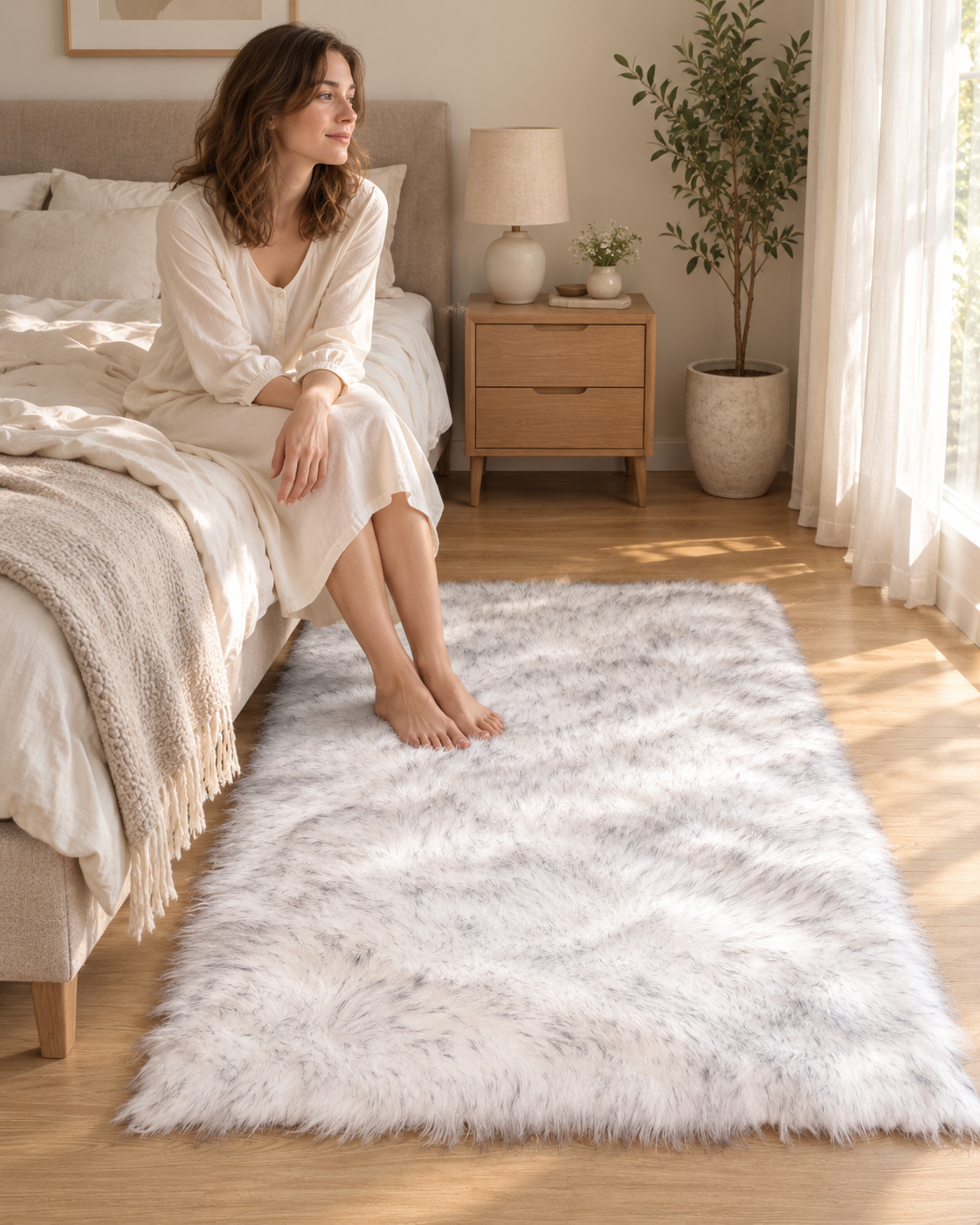
A smaller accent rug works differently. Place it beside the bed rather than trying to center it underneath a large bed. This creates a clear purpose for the rug and adds texture exactly where it is most noticeable.
Our Plush Faux Fur Accent Rug – White & Grey measures 3 × 4 ft (approximately 91 × 122 cm), making it better suited to bedside and accent placement than to anchoring an entire bed.
Living-room rug placement
In a main seating area, a larger rug usually looks more cohesive when it relates clearly to the sofa and chairs rather than floating independently in the middle of the floor. If you are shopping for a full living-room area rug, measure the furniture arrangement first rather than choosing from room dimensions alone.
Compact accent rugs are better used for smaller moments: beside an individual chair, in a quiet corner or as a soft textural element away from the main furniture grouping.
Reading corners and small spaces
Small rugs can be particularly effective when the space itself has a clear boundary. A reading chair, lamp and compact rug can visually create a small zone within a larger bedroom or living room.
Keep the placement deliberate. The rug should relate to the nearby furniture rather than appearing randomly positioned. In narrow or compact rooms, this approach can add warmth without covering most of the floor.
How much floor should remain visible?
There is no single measurement that works in every room. Instead, aim for consistent visual breathing room. Leaving some flooring visible around a rug helps show that its size and placement are intentional.
Before buying a rug, use painter’s tape to mark its dimensions on the floor. This simple step makes it much easier to judge whether the rug will feel balanced with the bed, chair, sofa or surrounding walkway.
Common rug-sizing mistakes
Using an accent rug as though it were a full area rug. A small rug floating beneath a large furniture group can make the arrangement feel disconnected. Give compact rugs a clearly defined role instead.
Choosing a rug before measuring the furniture. The relationship between the rug and furniture is usually more important than the room's total dimensions.
Blocking natural walkways. Consider doors, drawers and frequently used paths before deciding where the rug should sit.
Ignoring texture and maintenance. Plush textures can add softness to low-traffic areas such as bedrooms and reading corners, while busier areas may call for a flatter, easier-to-maintain surface.
A simple way to test rug placement
Measure the rug dimensions and mark the outline on your floor with removable painter’s tape. Walk around it, open nearby doors or drawers, and look at the outline from the room entrance. If the proportions feel deliberate before the rug arrives, you are much more likely to be happy with the finished placement.
The SCCS approach
Rug placement is less about following one rigid rule and more about giving each rug a clear purpose. Large rugs can anchor furniture; smaller accent rugs can introduce softness, texture and definition exactly where you need them.
Explore more pieces for warm, comfortable interiors in our home decor collection, or continue with our guide to making a neutral bedroom feel warm and cozy.