
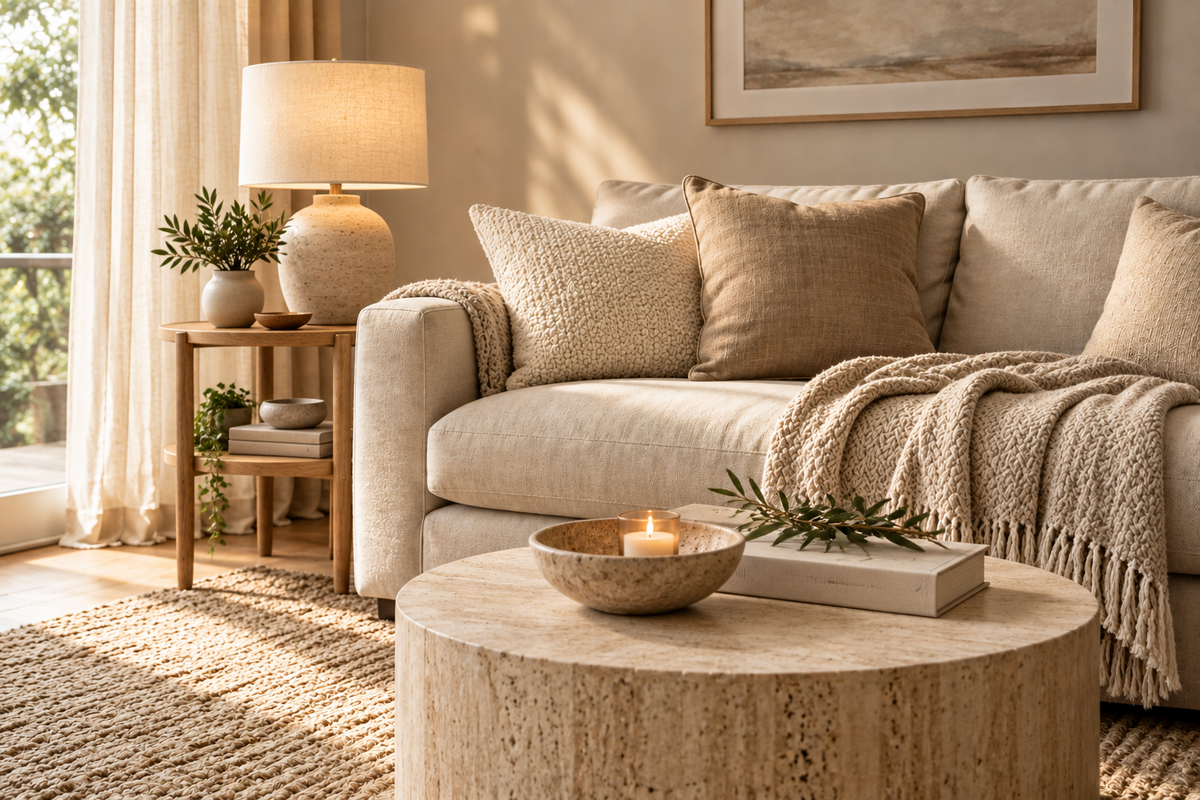
A neutral living room can feel calm and timeless, but if every surface is smooth and every color sits at the same value, the room can also feel a little flat. Making it cozier does not require adding bold colors or filling the space with seasonal decorations. Often, warmth comes from a few small changes in texture, lighting and contrast.
1. Add texture before adding more color
When the palette is already cream, beige, oatmeal or soft grey, introduce materials that catch the light differently. Knit, woven fabric, ceramics and natural-looking wood can create depth while keeping the room visually quiet.
A beige cotton knit throw can soften a sofa without changing the room's palette, while textured cushion covers add a smaller woven detail. The two do not need to match exactly; related neutrals usually look more relaxed when their textures differ.
2. Use smaller pools of warm light
A single bright ceiling light can make a comfortable room feel more functional than inviting. In the evening, smaller lamps placed near seating areas create separate pools of light and give textured surfaces more dimension.
A table lamp on a side table is an easy way to bring light closer to where you sit. The Beige Travertine-Style Table Lamp combines a warm neutral base with a linen shade, while our guide to choosing the right lighting for every room explains color temperature and layered lighting in more detail.
3. Layer neighboring neutrals
A cozy neutral room does not have to be one shade of beige. Try using a small family of neighboring tones: cream, oatmeal, sand, beige, taupe and natural wood. Slight differences help individual pieces remain visible without creating the contrast of a stronger accent color.
If the sofa is pale, for example, a slightly warmer throw and cushions can keep it from blending into the walls. A darker wood tone or a small amount of black can then provide definition.
4. Give everyday objects somewhere to belong
Comfort is partly visual. A room tends to feel calmer when frequently used items have a natural place rather than collecting on the sofa or floor. A compact side table can hold a lamp, book or drink without requiring a large piece of furniture.
The 2-Tier Round Side Table has a compact 16-inch footprint and two levels of surface space, making it suitable beside a sofa or reading chair where floor space is limited.
5. Create one comfortable corner
You do not need to restyle the whole living room at once. Start with the place you actually use most. A chair or end of the sofa can become a more inviting reading or evening spot with a nearby lamp, a soft textile and somewhere to set a book or cup.
This approach is especially useful in larger rooms because it creates a sense of intimacy without adding unnecessary furniture throughout the space.
6. Let the room look lived in
Perfectly arranged interiors can sometimes feel less comfortable than slightly relaxed ones. A throw does not need to be folded into an exact rectangle, and cushions do not need to sit at identical angles. Allowing soft materials to fall naturally helps the room feel like somewhere people actually spend time.
7. Change the feeling with the season, not the whole room
For autumn and winter, the same neutral foundation can feel warmer simply by increasing texture and using more ambient light in the evening. When brighter months return, remove a layer or two rather than replacing the entire palette.
This makes neutral interiors particularly flexible: the furniture and core colors can remain consistent while smaller layers change with how you use the home.
A cozy room is usually built from small layers
Start with the room you already have. Add one tactile textile, improve the lighting where you spend time, and introduce enough contrast that the individual materials can be seen. The goal is not to fill the room—it is to make each layer contribute something.
For more ideas, explore how the same principles work in a neutral bedroom, or browse the SCCS Indoors collection for pieces selected for calm, comfortable interiors.